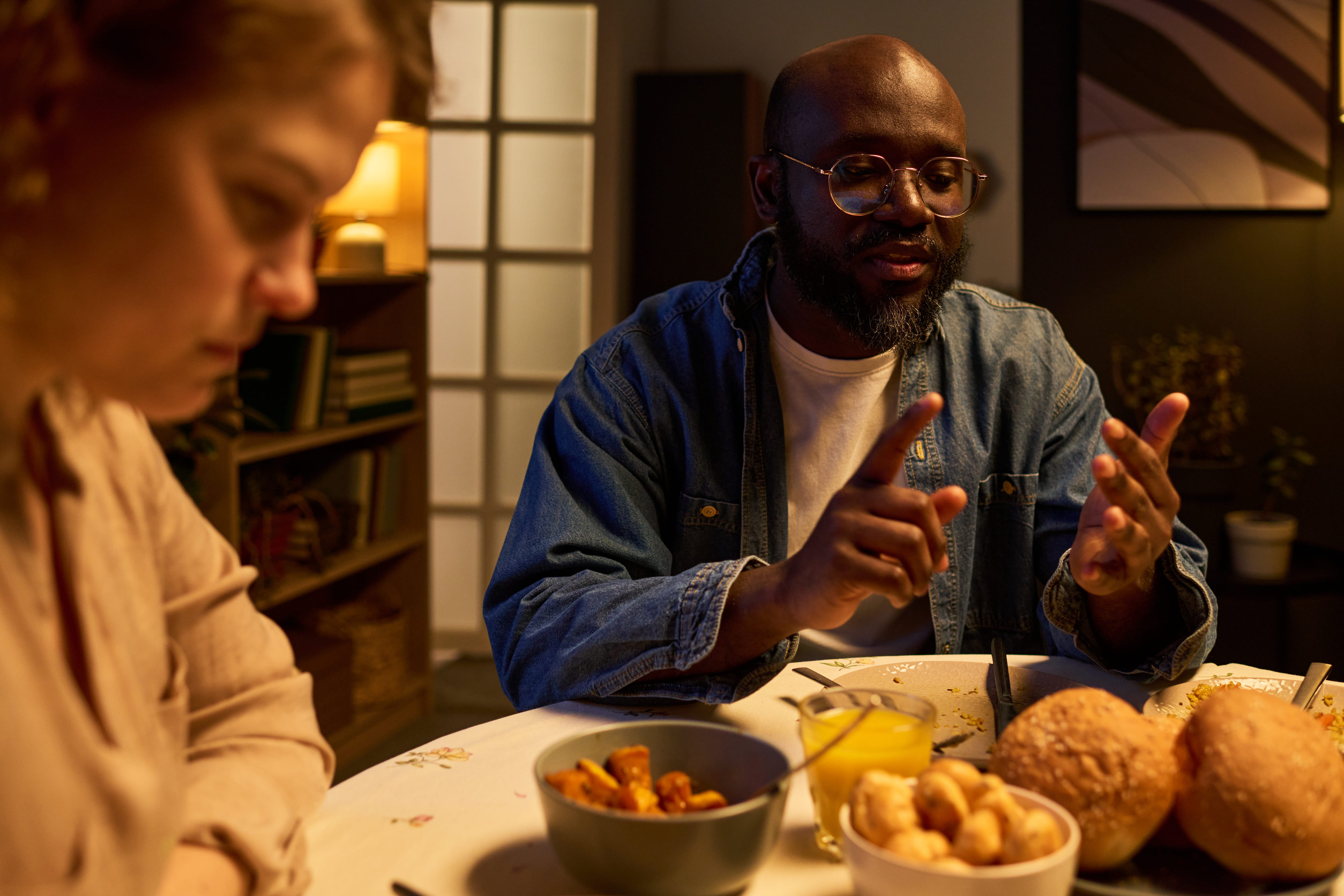
This is a phrase I hear regularly, and it comes in many forms, but the sentiment is always the same.
“I don’t want to offend you.”
Sometimes it arrives as a kind of apology, offered by someone who has just discovered they are speaking with a vegan and wants to preemptively soften whatever comes next. Sometimes it comes from vegans themselves, hesitating during a conversation they feel they need to have, yet holding back because they are not sure they have the right to say what they know.
Either way, it is worth pondering, because buried inside that phrase is a misunderstanding about how offence actually works, and once you see it clearly, it changes the way you show up in every conversation you have about veganism.
Here is the thing.
We cannot offend anyone without their permission.
Now, before you push back on that, let me be precise about what I mean, because this is not a licence to say whatever we like without care or consideration. It is something more nuanced than that, and more useful.
If I were to say to my partner or a beloved family member, “I no longer want to see you or have anything to do with you,” the pain that followed would be real and it would be deep, and it would land very differently than if I said the same words to a stranger on the street. The words are identical. The experience of receiving them is entirely different, because the meaning we make of what someone says to us is shaped by our relationship with them, our history, our fears, our sense of self, and the stories we carry about who we are and what we deserve.
Pain, to a large extent, is received rather than given.
That does not mean we are not accountable for causing unnecessary harm, or that we should be careless with our words, or deliberately set out to wound people. Of course we shouldn’t. But it does mean something important, which is that we are responsible for what comes out of our mouths, BUT we are not responsible for how another person chooses to receive it.
This distinction matters enormously for vegans who are trying to advocate with both honesty and compassion, because the fear of offending someone is very often not really about the other person at all. It is about our own discomfort with their reaction.
When we say “I don’t want to offend you,” what we are often really saying is “please don’t get angry with me” or “please don’t make this awkward” or “I don’t know what to do when you push back and I would rather avoid that feeling altogether.“
And that is understandable. But it is worth naming it for what it is because when we hold back our truth to manage someone else’s reaction, we are not being kind. We are being conflict-avoidant, and there is a real difference between the two.
The Hidden Assumption
Something else comes up regularly in these conversations, and it is the assumption that veganism is primarily about diet. When I reach out to people on LinkedIn or other platforms, I often receive responses along the lines of “I’m sorry but I eat meat” or “I’m not vegan and I hope that doesn’t offend you,” and what strikes me every time is how quickly the conversation moves to food, as though veganism begins and ends with what is on the plate.
As vegans know, it does not.
The Philosophy of Veganism
Veganism is an overarching philosophy rooted in ahimsa, the ancient principle of loving kindness, and it extends that loving kindness outward in every direction, towards ourselves, towards other people, towards all living animals and not only the ones we have chosen to share our homes with, and towards the ecosystems that sustain all life on this planet.
When we understand veganism through that lens, the question of what we eat becomes not a lifestyle preference but a natural expression of a deeper commitment, because to consume the bodies or secretions of other animals, when we look honestly at what that requires and what it costs, is very difficult to reconcile with a genuine practice of loving kindness.
So when someone says to me that they hope they have not offended me by not being vegan, my response is warm and it is direct. I tell them that they cannot offend me, and I mean it, and I also tell them that I would like to share something with them, not to shame them or to win an argument, but because I believe that most people, when they truly understand what veganism is and what it is not, find that it resonates with values they already hold.
The goal is never to make someone feel bad. The goal is to plant a seed, to open a door, to offer a perspective that might sit quietly in the back of someone’s mind until the moment arrives when they are ready to walk through it.
We can tell people whatever we want to tell them, and we can do it with loving kindness, and we can trust that their reaction belongs to them, not to us.
That is not indifference. That is freedom. And it is from that place of freedom that the most powerful advocacy becomes possible.
Would you like help?
If you are ready to communicate with more confidence, more calm and more impact, I offer a number of ways to do that:
- Discover Your Vystopia Impact Profile, the personalised snapshot of where you are right now in your vystopia journey and what to focus on next to move forward with greater clarity and confidence. https://veganpsychologist.com/vystopia-impact
- Join my next FREE event which I run every month: https://veganpsychologist.com/master-class-register
- Find a time to speak with me to to discover how the Vystopia Transformation Framework can accelerate your vegan progress: https://veganpsychologist.com/conversation